

The Ghost in the Machine.
An AI model for lead scoring starts quietly dropping high-value prospects from your CRM. It looks perfectly healthy on the technical dashboard. What is your immediate protocol?

Master the 4 pillars of AI risk and the tiered control framework used by elite tech teams.
Protect your enterprise reputation and eliminate technical blind spots before they scale.
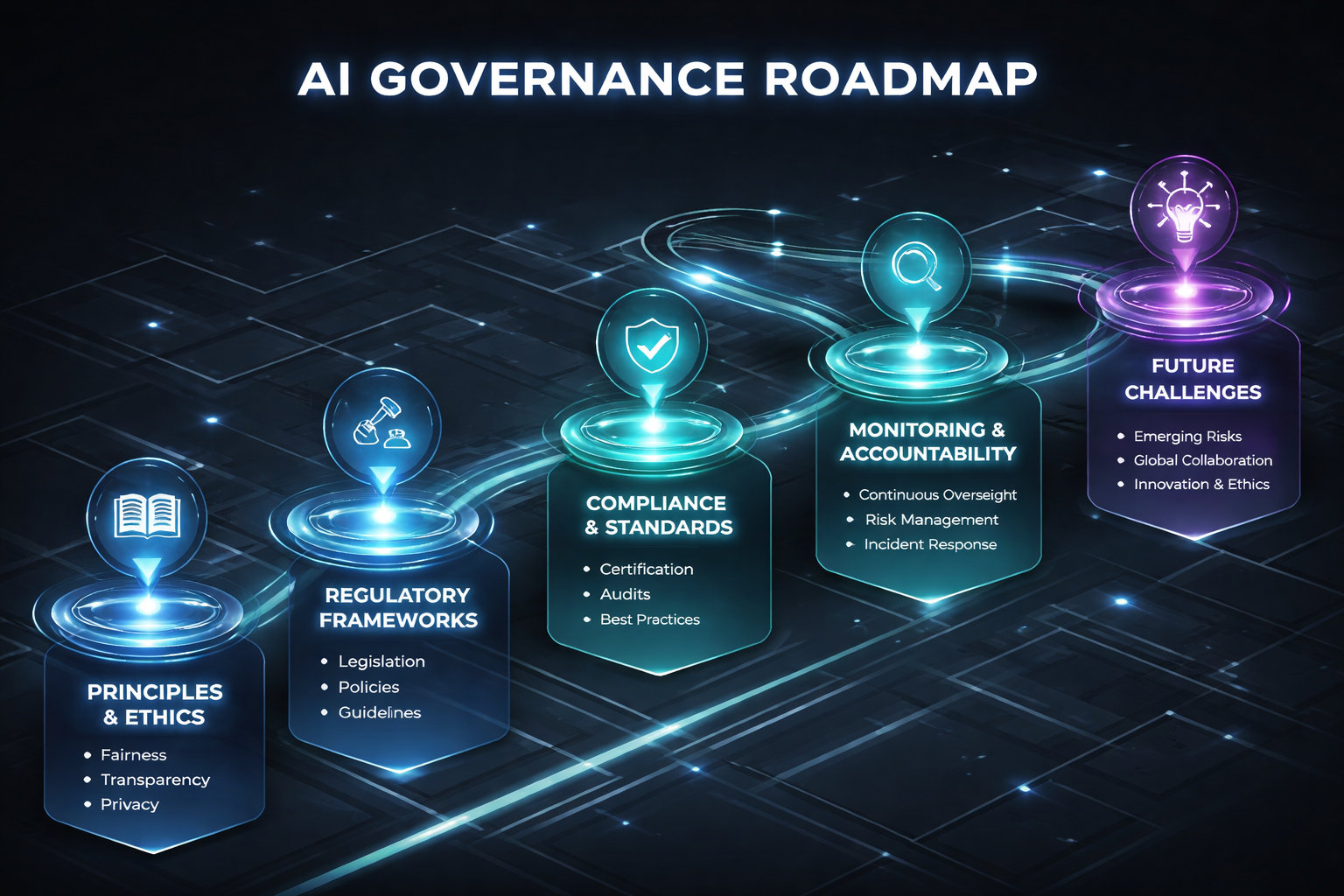
The Strategic Roadmap
AI Governance isn't about reading code—it's about setting the rules of engagement. Here is our flight plan for this protocol.
Select your perspective:
The AI Lifecycle
Risk isn't a "deployment day" surprise; it's a silent passenger from day one. Mitigation must happen at every turn.
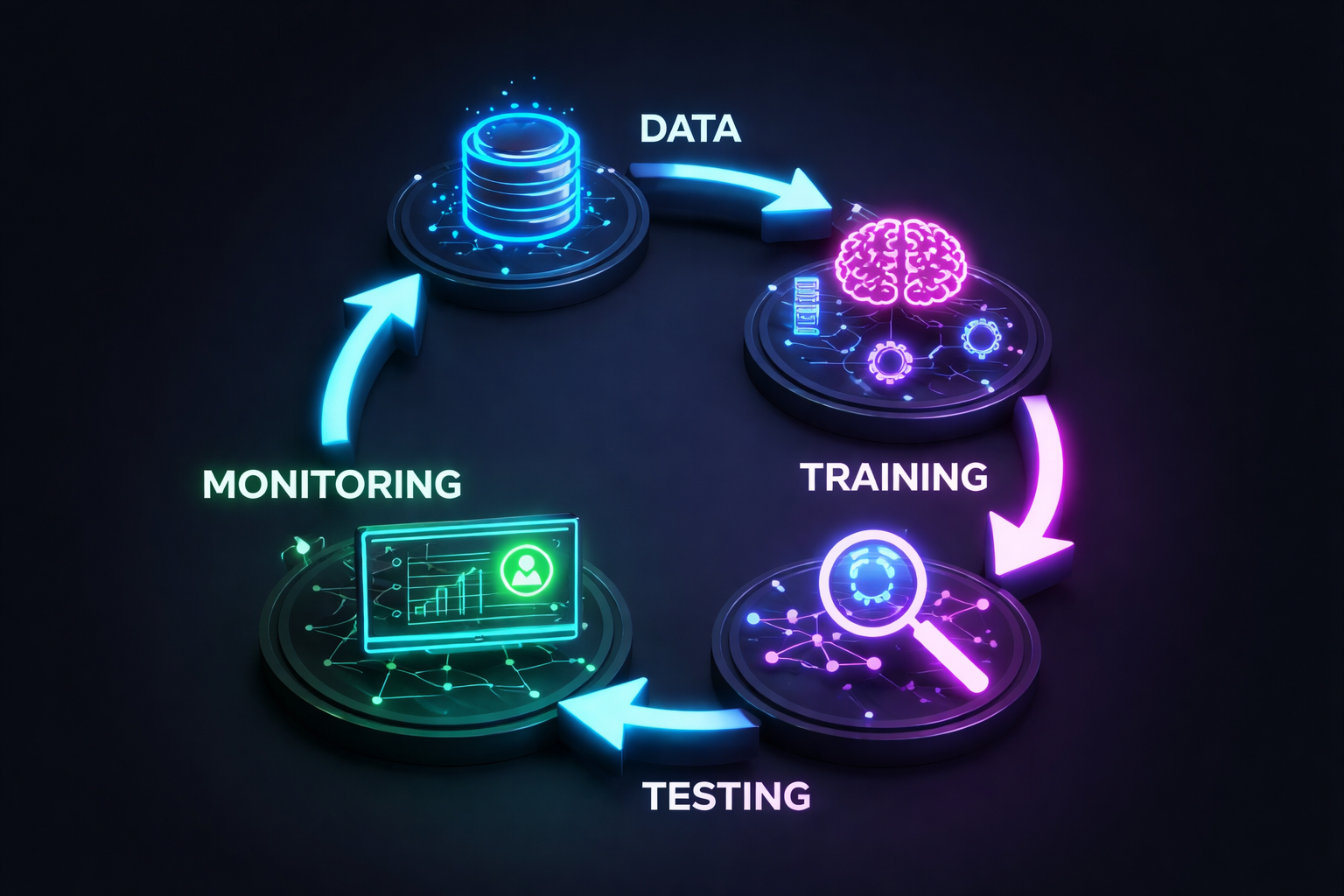
This is where bias is born. If your data doesn't represent your customers, your model won't serve them.
Models 'decay' over time as the world changes. Without active tracking, your AI becomes a liability.
The Four Pillars of Risk
Enterprise AI risks cluster into four distinct domains. Knowing them allows you to assign specific accountability.

Priority Heatmap
Leaders use Likelihood x Impact to decide where to invest limited governance resources.
Recommended Protocol
Medium Priority
Check Your Logic
In a high-impact AI project, when is the most cost-effective time to address fairness risks?
Governance Levers
Strategic leaders don't manage code; they manage the levers that control how code is developed and deployed.

Setting hard boundaries on what problems AI is allowed to solve for the business.
Defining minimum accuracy and fairness scores that must be met before production.
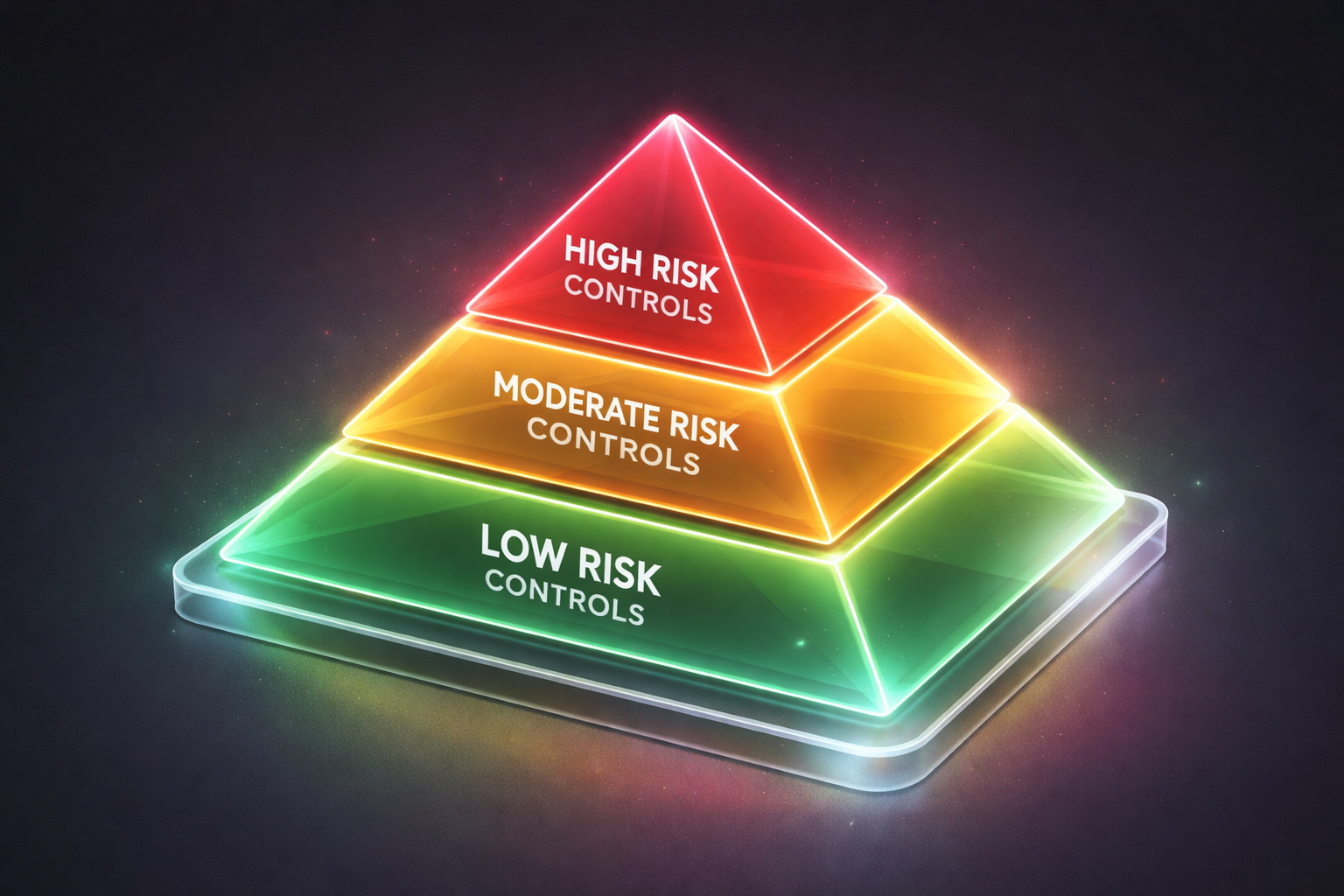
The Control Tiers
One size does not fit all. We categorize AI projects into three tiers to match rigor to risk.
Applying the Tiers
An AI system used for autonomous recruitment that filters thousands of candidates should belong to which tier?
Who Owns What?
Failures often happen in the 'white space' between departments. Clarity of ownership is a mitigation strategy.

Owns the problem framing and the final risk-reward decision.
Owns the performance metrics and the security guardrails.
The Incident Playbook
When a model fails, the first 60 minutes are critical. Your team must know the triage protocol by heart.
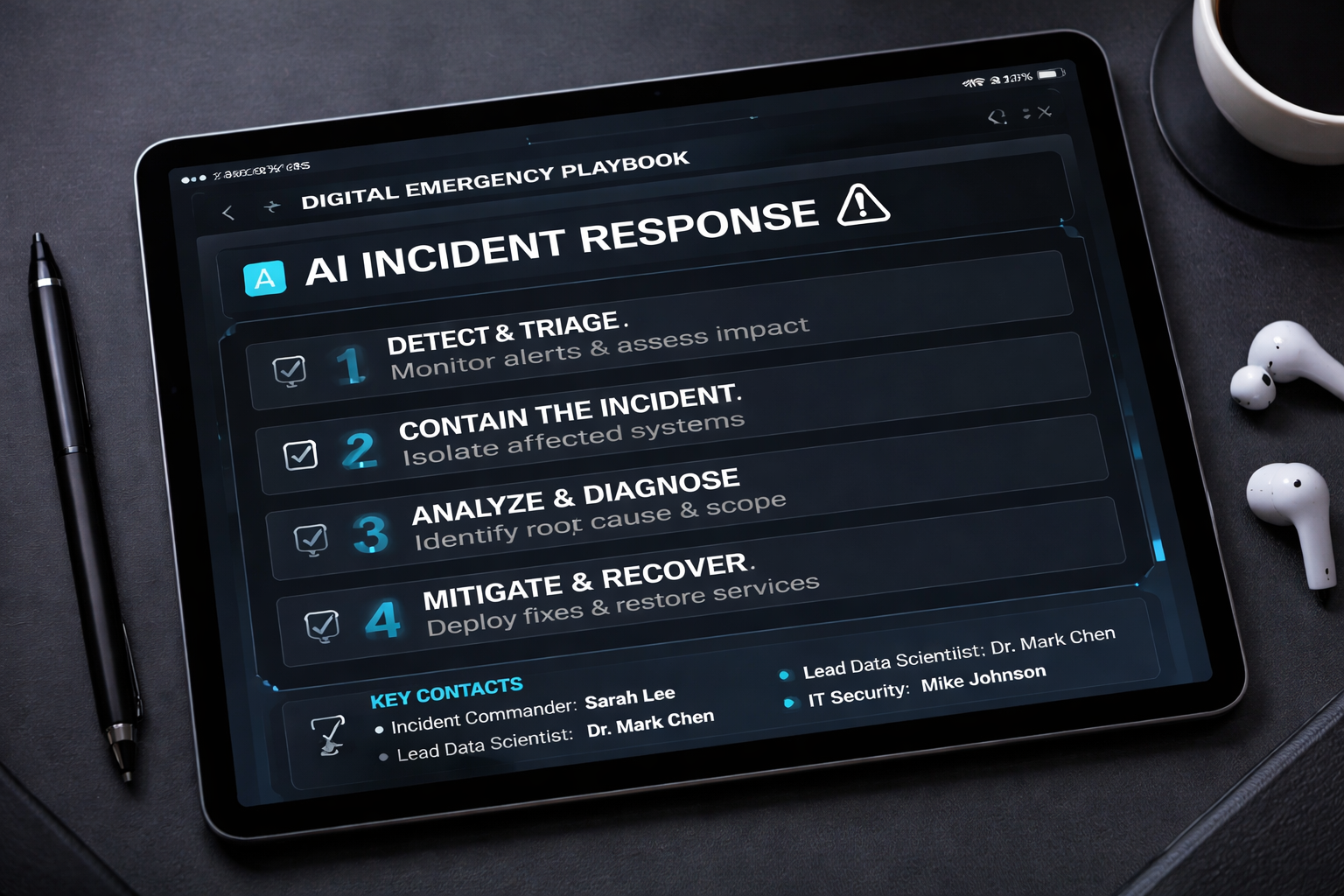
3-Step Response Template:
- Triage: Confirm the failure scope and pause production traffic if safety thresholds are breached.
- Stabilize: Roll back to the last known 'safe' model version while the root cause is diagnosed.
- Audit: Perform a post-mortem to update the risk register and prevent recurrence.
Protocol Summary
You are now ready to govern AI projects with strategic precision.
Risk begins at the framing stage.
Likelihood x Impact drives focus.
Match rigor to the project stakes.
Clarity in crisis prevents catastrophe.
Strategic Assessment
Validate your proficiency in AI Risk Protocols. 80% score required for certification.